Know the Job.
Nail the Install.
Grow the Business.

Everything you need from Attic Breeze in one place. Real tools. Real support. Built for contractors, backed by a team that knows the work.

The path to the job

Everything you need. Right when you need it.

One Attic Breeze job runs the same seven steps every time. Pick the step you are standing on and the tools for it are right there.

Size the whole attic, not just the opening.

Square footage, roof type and goal in — fan count and model out. Sizing the attic once beats a second trip up the ladder.

  • Ventilation calculator for fan count and recommended model
  • Size by total attic square footage, not the existing vent opening
  • Check available intake before you quote the job
  • Multiple roof planes, limited soffit intake and heavy sun exposure all influence the count
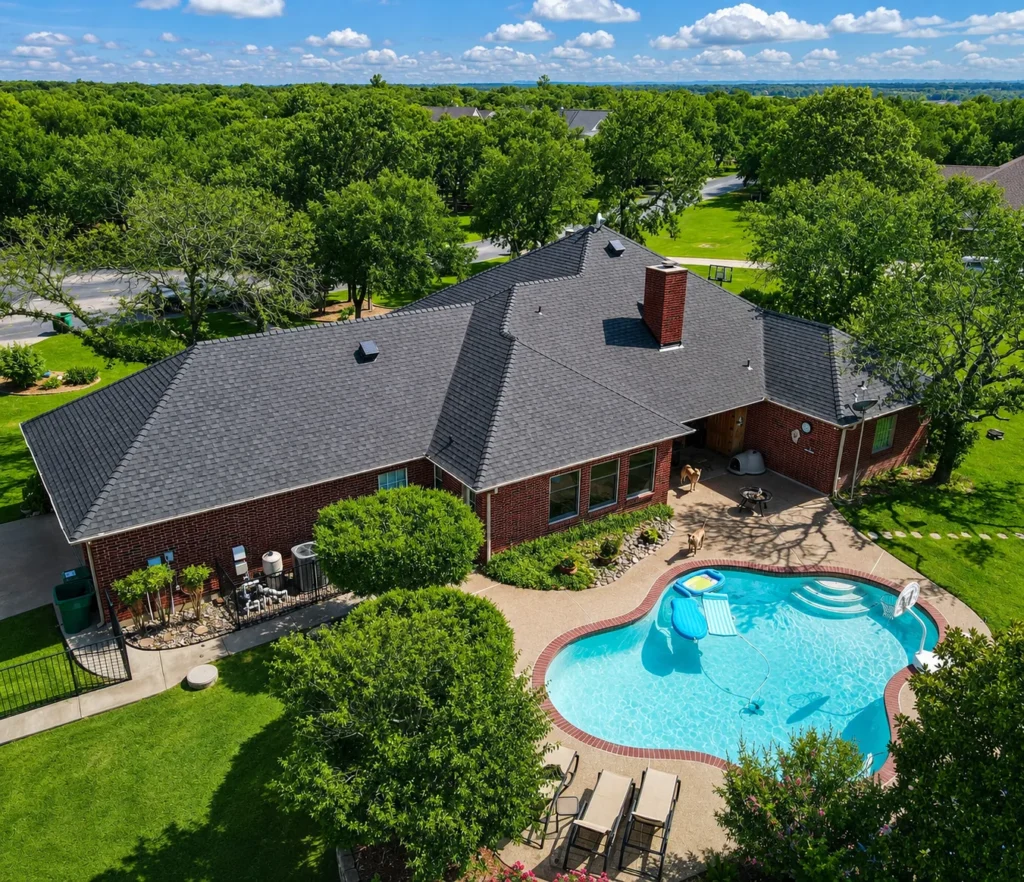
UltraBreeze solar attic fan installed on the roof of a brick house
Sizing the whole attic at once, rather than adding one vent at a time.

The half that gets missed

A fan can only exhaust what the soffits let in.

Exhaust is the half everyone sizes. Intake decides whether the rated airflow ever shows up. Run the attic through the code minimum before you quote it.

Intake check

Net free area required by code, and how much of it has to sit low on the roof.

Square feet of vented attic space, meaning the footprint under the attic rather than the whole house.
1:300 applies where a vapor retarder is present, or where 40 to 60 percent of vent area sits in the upper portion. Confirm against local code.
Running intake slightly heavy keeps the attic under neutral pressure and stops the fan pulling conditioned air through ceiling gaps.

Total net free area so far 864sq in

Total net free areaRequired ventilation for the whole attic 864sq in
Intake NFA neededSoffit, eave or edge vents, low on the roof 432sq in
Exhaust NFAThe share fans and upper vents cover 432sq in

Check that intake number against the listed net free area of the soffit vents actually on the house. Painted-over or screened vents deliver a fraction of their rating. Then take the attic through the ventilation calculator for fan count and model, and pull the matching technical data sheet for the submittal.

Estimate based on published attic ventilation ratios. A planning aid, not an engineered design. Local amendments govern. Questions on a specific attic go to support@atticbreeze.com.

The lineup

Three series. Built for roofs across the country.

Pick by roof type first, then by wattage. Every one of them is built to the same CoreShield™ standard and carries the same lifetime limited parts warranty, so the choice is about the roof, never about which one holds up.

Swipe to explore all series

UltraBreeze self-flashing (SFA) solar attic fan
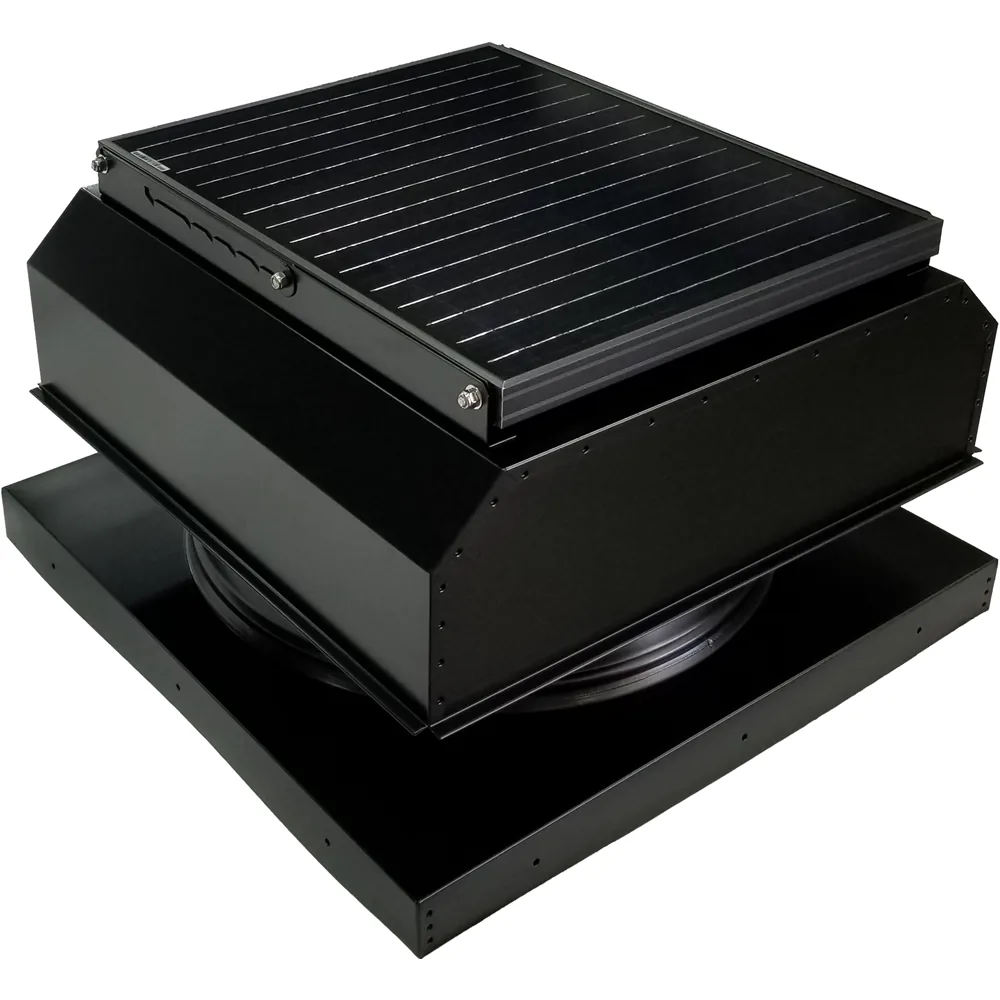
UltraBreeze curb-mount (CMA) solar attic fan

Flagship

UltraBreeze™ Series

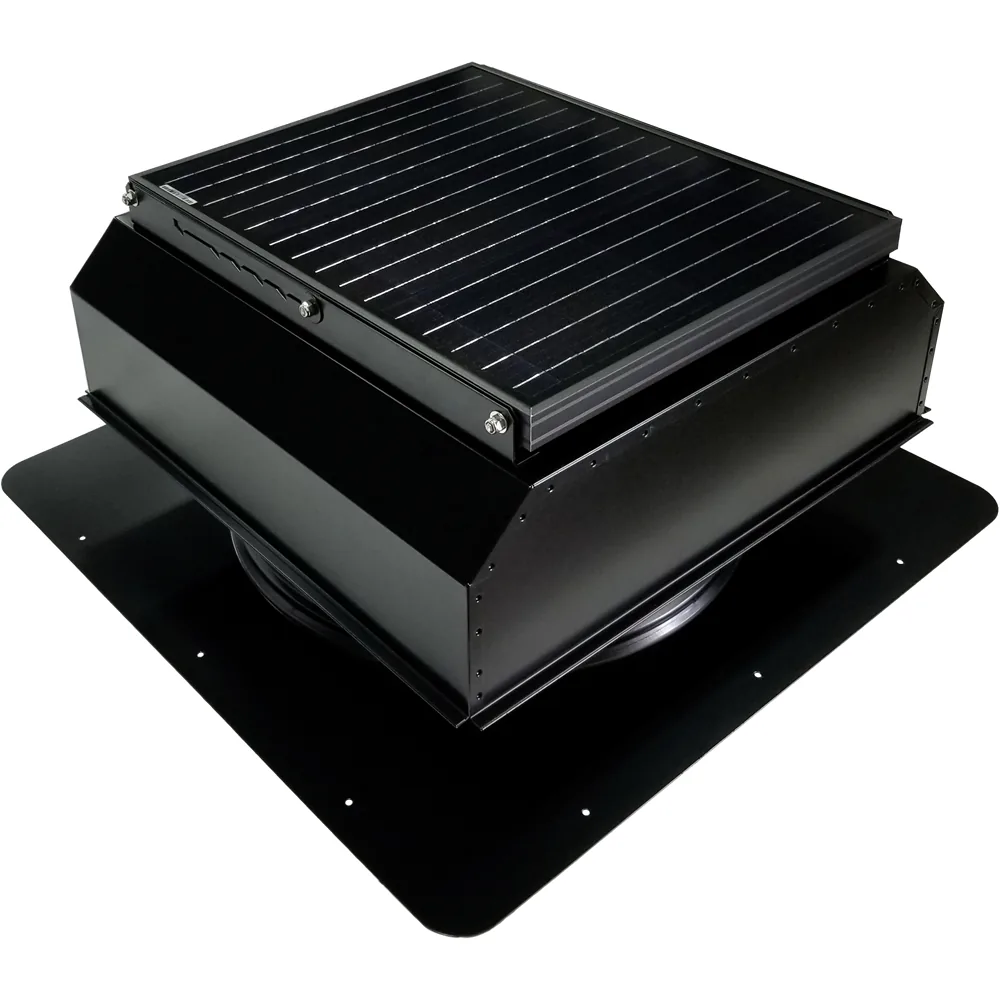
Maximum airflow and the widest choice of mounts. 14 in blade, zincalume alloy steel housing.

Performance

PRO
25W — up to 1,550 CFM
HP
35W — up to 1,775 CFM
MAX
45W — up to 1,925 CFM
ELITE
65W — up to 2,150 CFM

Mount Options

  • Self-Flashing — 3/12 to 12/12 pitch
  • Curb-Mount — flat to 12/12 pitch

Solar Panel Configuration

  • Attached — PRO, HP, MAX
  • Remote / Detached — all tiers; required for ELITE
AeroBreeze self-flashing (SFA) solar attic fan
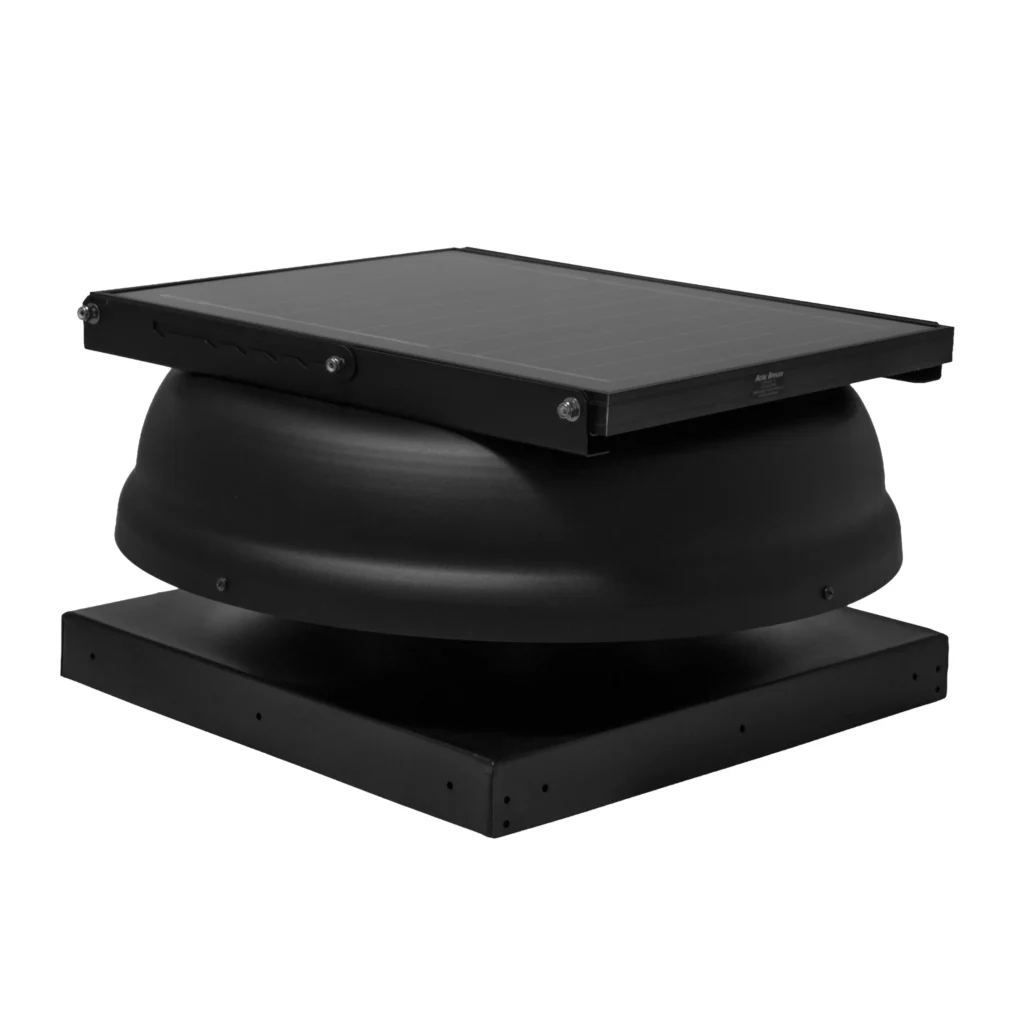
AeroBreeze curb-mount (CMA) solar attic fan

Low profile

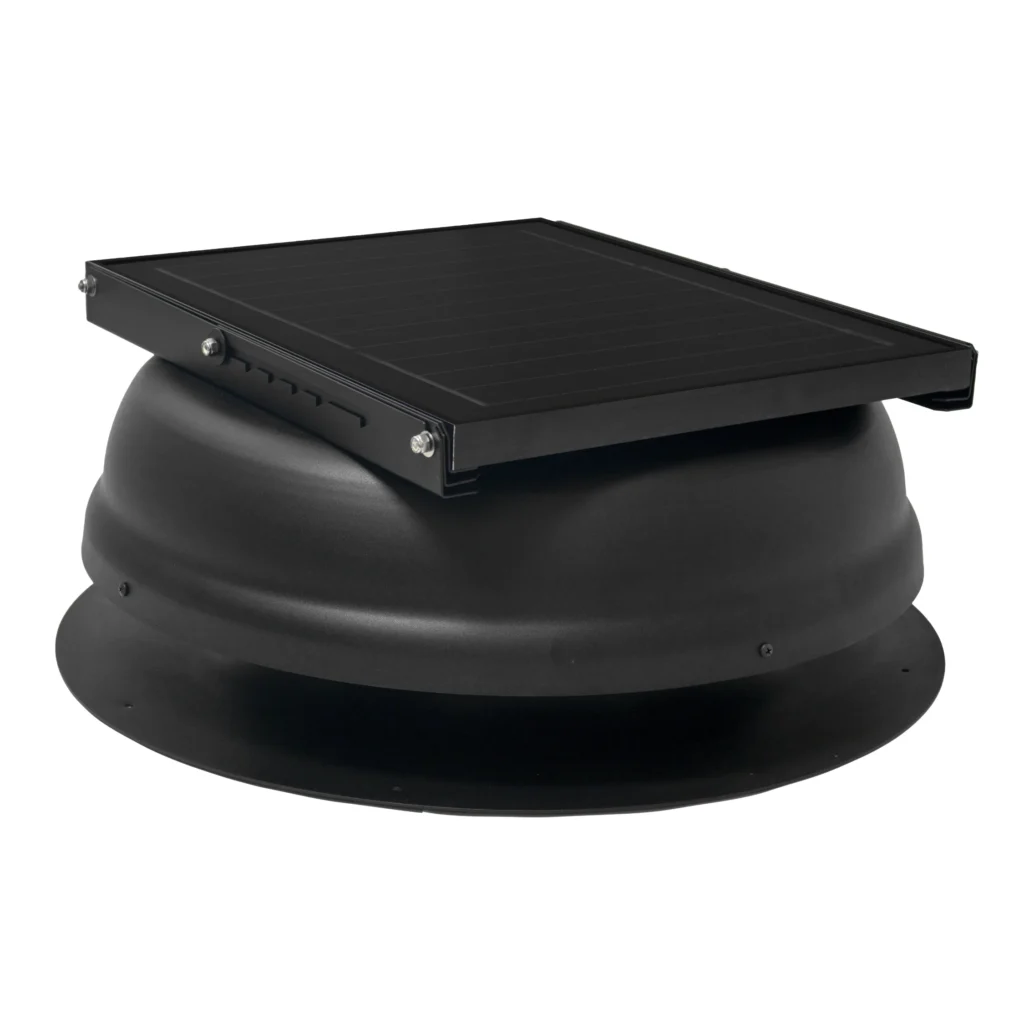
AeroBreeze™ Series

Built with the same CoreShield standard in a lower profile. 12 in blade, spun aluminum housing.

Performance

PRO
25W — up to 1,475 CFM
HP
35W — up to 1,625 CFM
MAX
45W — up to 1,650 CFM

Mount Options

  • Self-Flashing — 3/12 to 12/12 pitch
  • Curb-Mount — flat to 12/12 pitch

Solar Panel Configuration

  • Attached
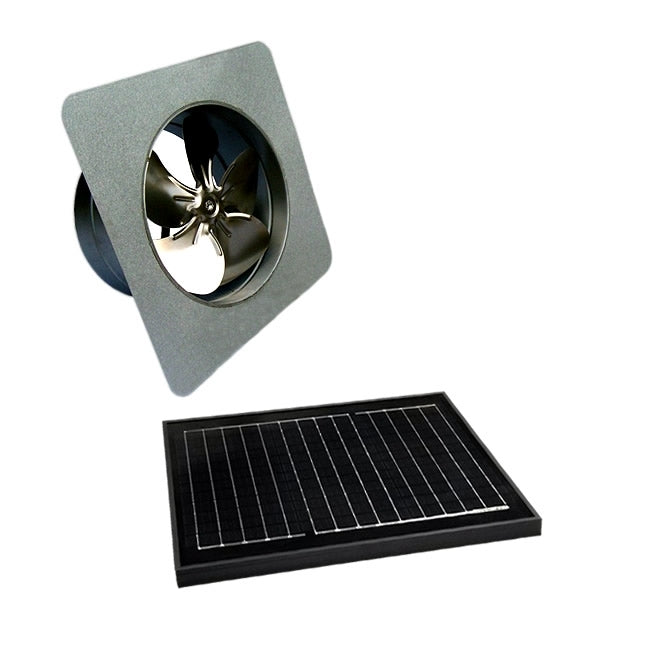
GableBreeze gable-mount solar attic fan
Gable Mount

No roof penetration

GableBreeze™ Series

Mounts behind or beneath a properly sized passive gable vent. 14 in blade, roofline left intact.

Performance

PRO
25W — up to 1,550 CFM
HP
35W — up to 1,775 CFM
MAX
45W — up to 1,925 CFM
ELITE
65W — up to 2,150 CFM

Mount Options

  • Gable / Retrofit Mount — no roof penetration

Solar Panel Configuration

  • Remote / Detached — 25 ft cable, flush brackets

Picked your model? Order it.Single units and accessories ship direct from atticventusa.com. For pallet quantities and job pricing, your distributor or your rep will get you further than a cart will.

Why pros trust it

The part that’s the same
in every single one.

Three series, one build standard. CoreShield™ is the shared DNA of every Attic Breeze solar attic fan — not an upgrade on some models and not an option you have to spec. It covers how the fan is built, how it runs, and how it goes on the roof.

Swipe to see all three pillars

ForgeBuilt shield icon with checkmark, Attic Breeze orange

ForgeBuilt™

Built for the roof, not the shelf

  • All-metal housing. No plastic to go brittle after a few summers in a 150°F attic.
  • Stainless steel hardware. Professional grade, so nothing rusts loose on you.
  • Balanced blades. Dynamically balanced to keep vibration down and the motor alive longer.
  • Powder-coated finish. Holds up to sun, heat and weather, and still looks right years in.

Why you care

Fewer service calls and fewer warranty claims on a roof you already warranted.

SmartFlow shield icon with airflow lines, Attic Breeze orange

SmartFlow™

Performance that thinks

  • Quiet high-efficiency motor. Moves air without the homeowner hearing it all day.
  • 100% solar powered. No wiring, no circuit, no electrician, no line on the power bill.
  • Runs on attic temperature. It starts and stops on its own, with nothing to set.

Why you care

No electrical coordination on the job, and no callback because somebody could not figure out the controls.

ProSecure shield icon with safety cross, Attic Breeze orange

ProSecure™

Designed for the install

  • Automatic thermal switch. The fan runs when the attic actually needs it.
  • Integrated fire safety switch. A thermal fuse stops the fan if attic temperatures climb above 228°F.
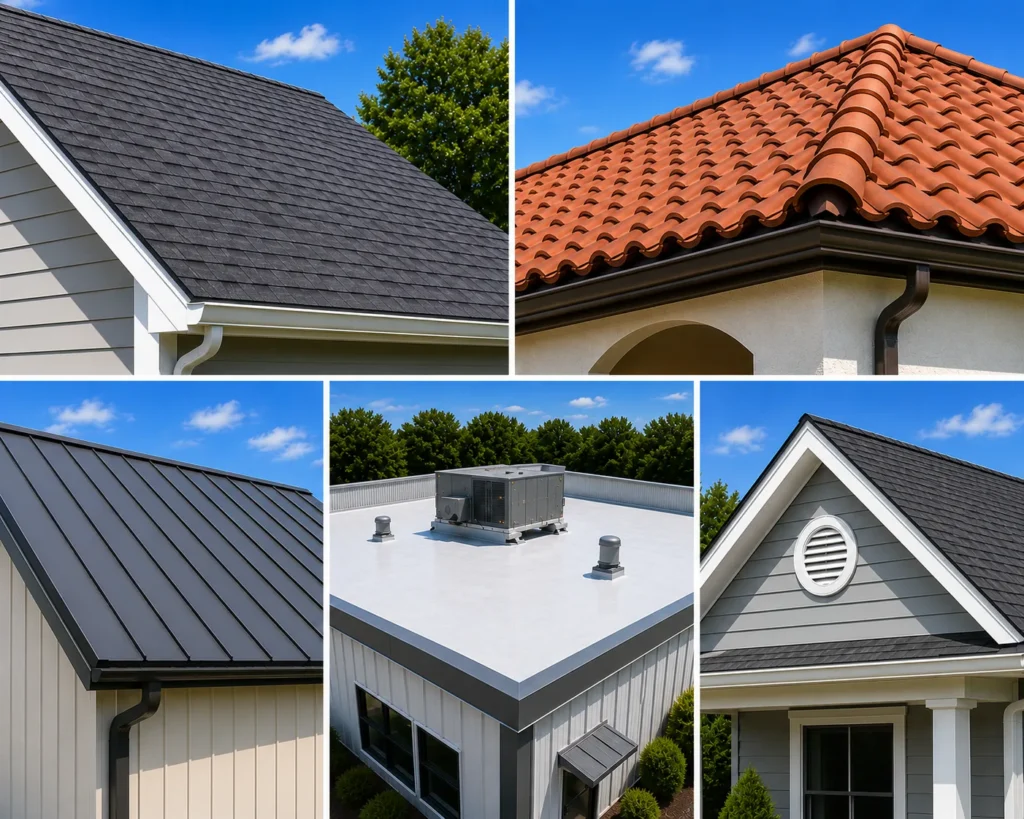
  • Mounting engineered by roof type. Clean integration on shingle, tile and metal.

Why you care

Faster installs, repeatable results, and one less thing the homeowner can call you about.

In roofing, reputation isn’t built on install day. It’s built on what still performs years later. CoreShield™ is not a feature list. It is the standard every Attic Breeze fan is built to, with no shortcuts and no exceptions.

Different trades, same advantage

Where solar ventilation fits your scope.

Swipe to see every trade

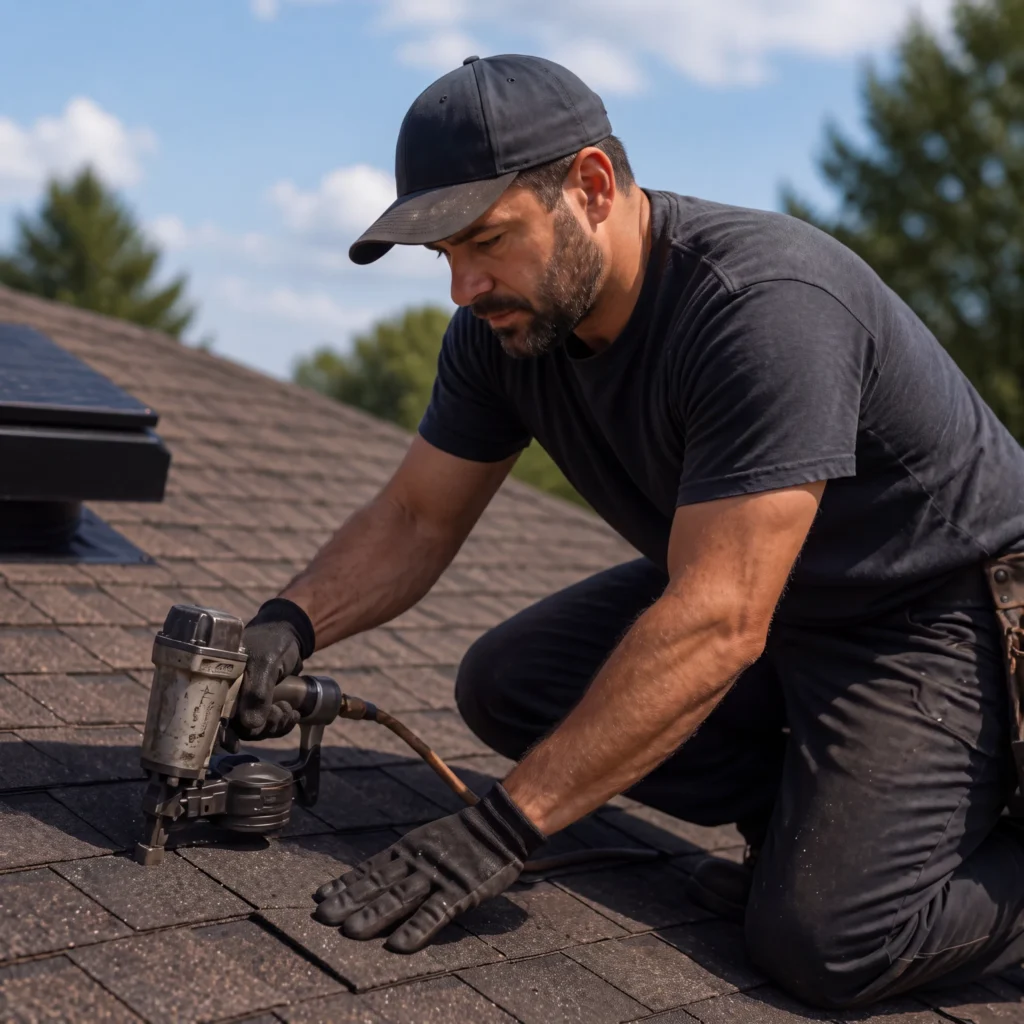
Roofing contractor using a nail gun on a shingle roof

Roofing contractors

Add it during replacement or repair while the deck is already open. Better ventilation means fewer callbacks on the roof you just warranted.

Your advantage

  • Easy reroof add-on — install ventilation while the roof is already open.
  • Fits more roof applications — multiple product and mounting configurations give you options across different roof types.
  • More homeowner value, fewer callbacks — solve ventilation as part of the roofing system instead of leaving another problem behind.
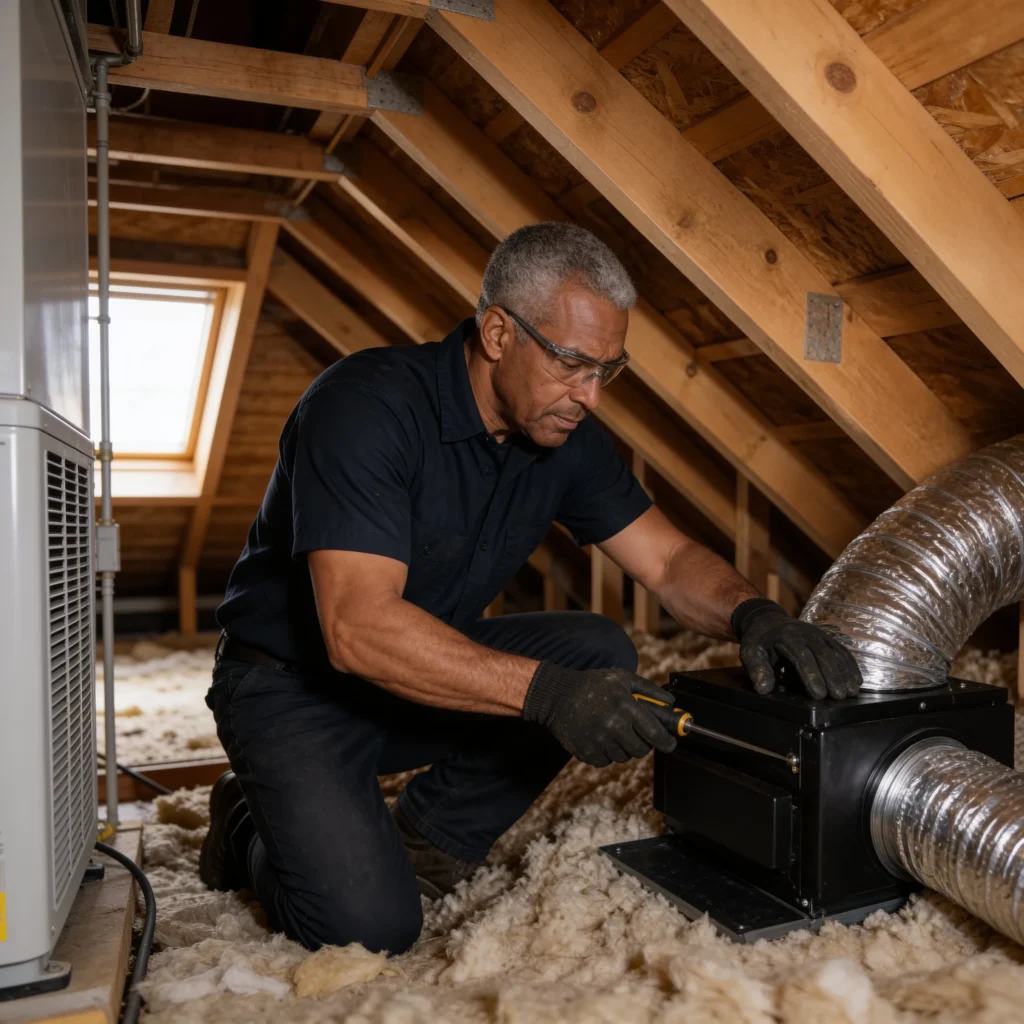
HVAC technician connecting flexible ductwork in an insulated attic

HVAC professionals

Reduce attic heat at the source. Help tackle upstairs comfort issues while easing the heat load on the HVAC system.

Your advantage

  • Address attic heat at the source — reduce the attic heat load before simply compensating with larger equipment.
  • Solar-powered operation — a ventilation solution that does not add normal electrical operating cost.
  • Stronger comfort story — pair HVAC improvements with attic airflow for a more complete homeowner solution.
Remodeler reviewing plans

Remodelers

Bring a premium solar upgrade into the project without complicating the scope. Attic Breeze adds homeowner value with minimal electrical coordination.

Your advantage

  • Premium project add-on — another high-value improvement to offer during renovation work.
  • Minimal electrical coordination — solar-powered ventilation does not require a conventional powered ventilation circuit.
  • Works across applications — product options for different roof and retrofit situations.
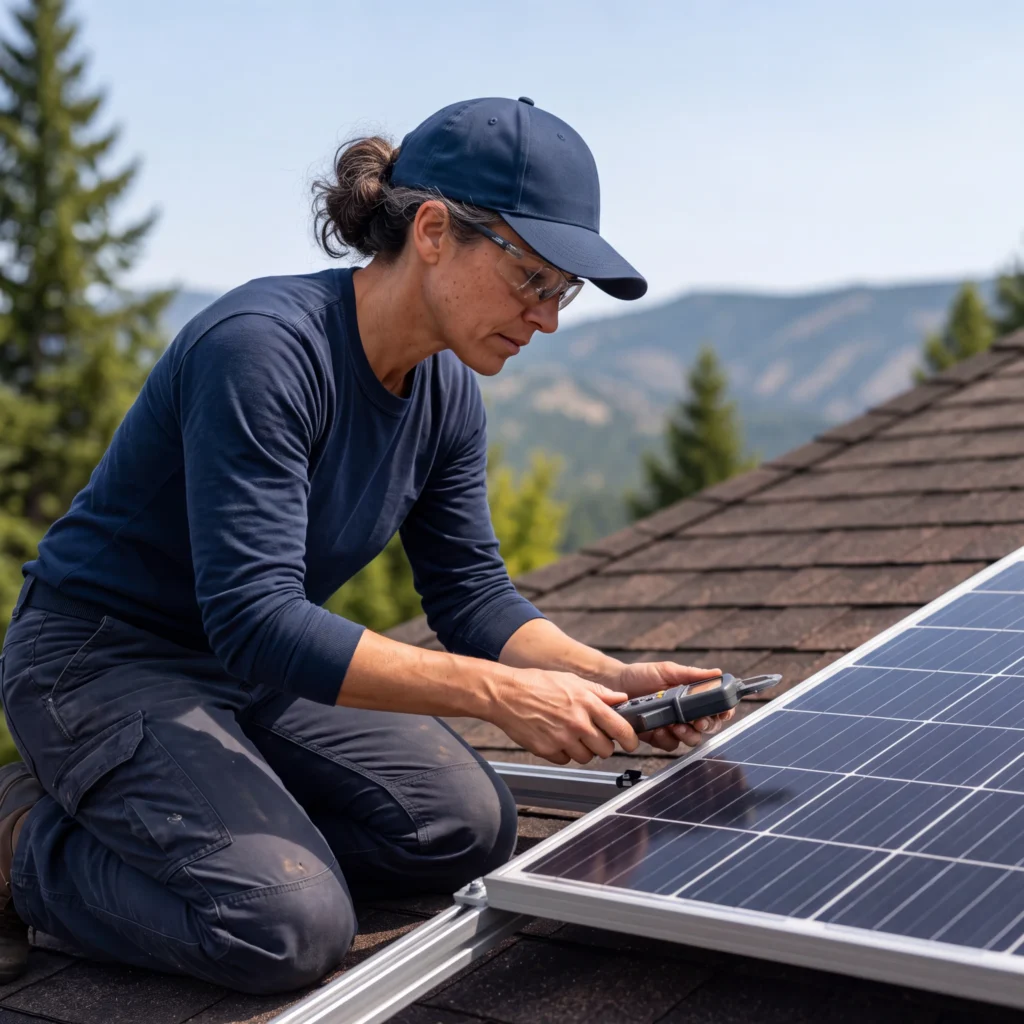
Contractor in safety glasses kneeling on a shingle roof to work on a rooftop solar panel

Efficiency contractors

Pairs with air sealing and insulation work. Gives you a visible, solar-powered line item on an audit that otherwise sells invisible improvements.

Your advantage

  • Complements air sealing and insulation — address attic airflow alongside the rest of the home’s efficiency work.
  • Reduce summer attic heat buildup — strengthen the homeowner comfort and efficiency story.
  • Visible solar-powered upgrade — gives the homeowner a tangible efficiency improvement they can actually see.

Specs & approvals

Independently tested.
Publicly listed.

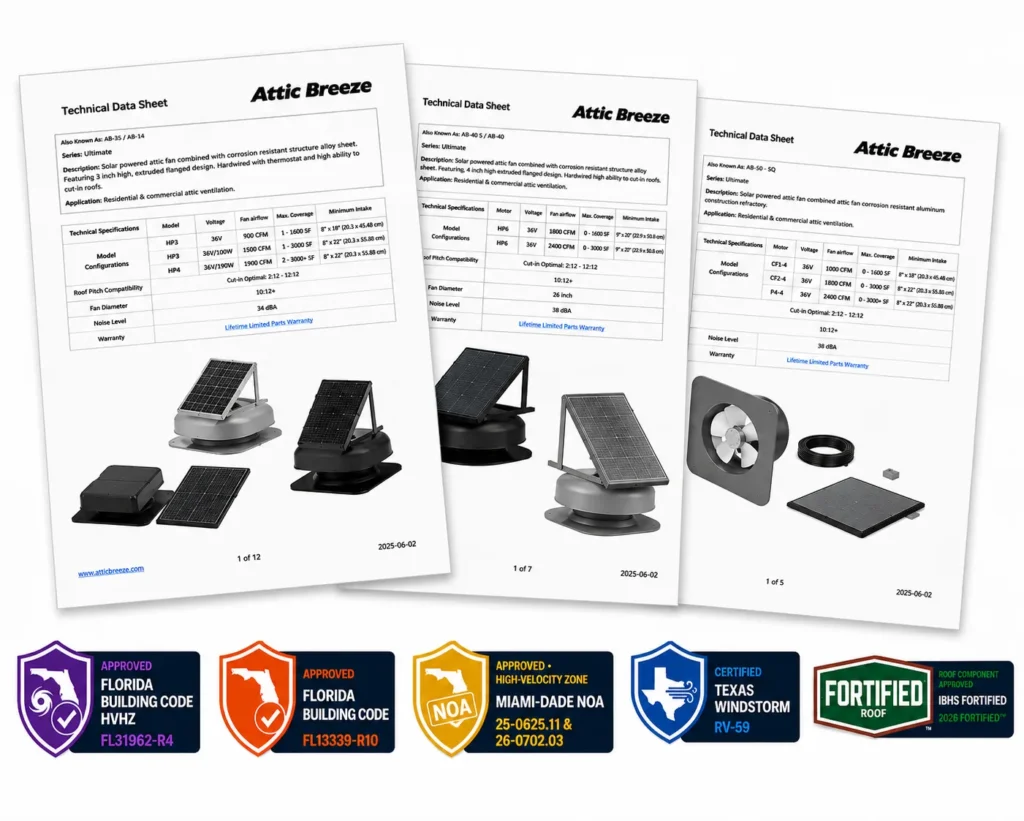
Five independent bodies have tested and listed these fans. The full records, numbers and expiration dates live in the Resource Center.

Scroll or drag · 5 credentials

Out in the field

Trusted by roofing contractors nationwide.

Real installs on real jobsites, posted by the contractors doing the work. Every company on this wall is in our Certified Installer records.
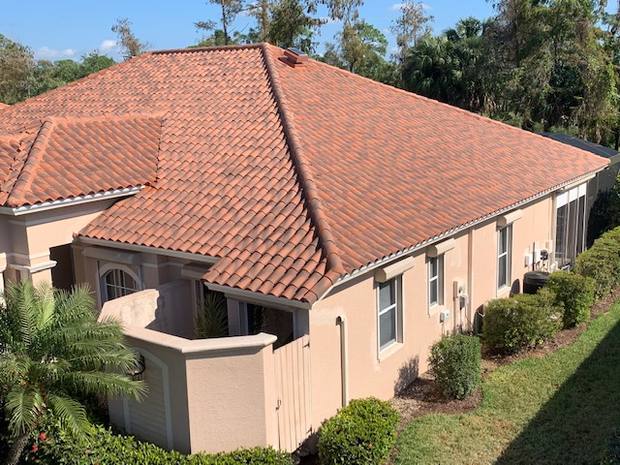
Attic Breeze solar attic fan curb-mounted on a barrel tile roof in Florida
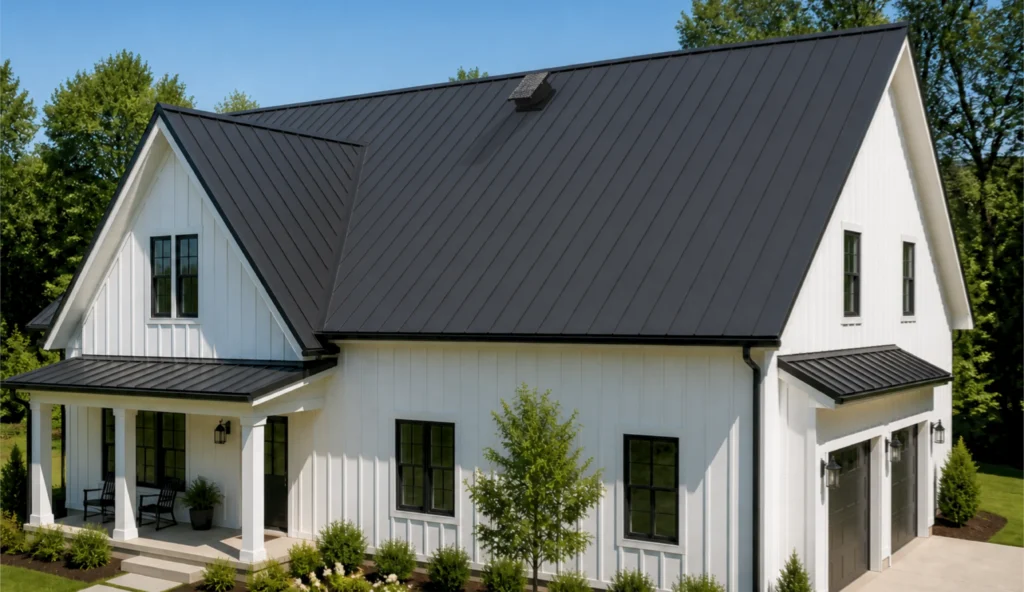
White farmhouse with a black standing-seam metal roof and a low-profile solar attic fan near the ridge
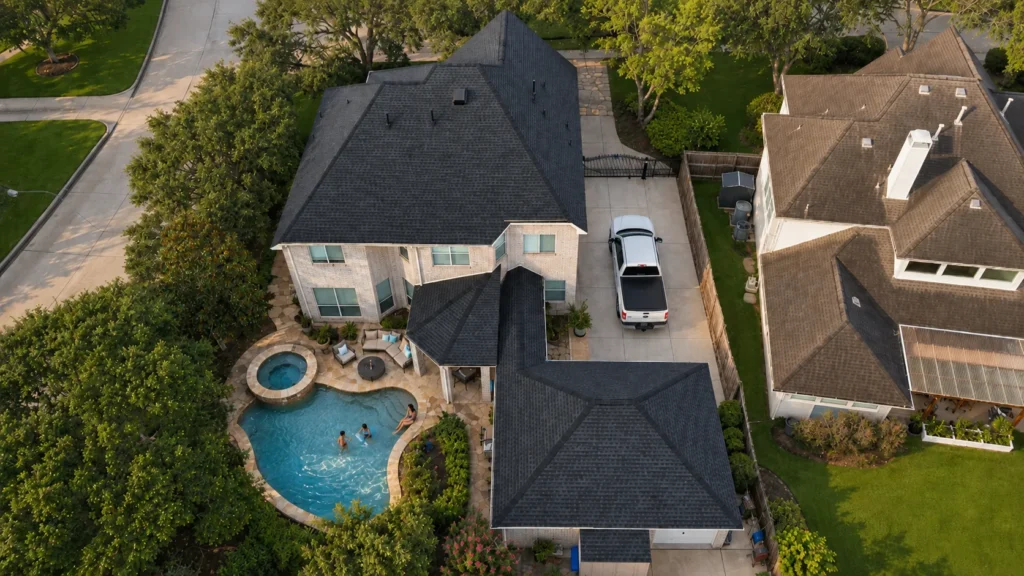
Aerial view of a two-story home with black Attic Breeze solar attic fans on its shingle roof

I’ve installed Attic Breeze on 95% of the homes I’ve reroofed, as it’s easily the best and most user-friendly product on the market.

★★★★★Luis AvilesRoofing contractor · Verified Google review

Installer programs

You’re already doing the work.
Get more from every install.

Whether this is your first Attic Breeze job or your hundredth, there’s a program built around what comes next.

First install

Breeze Boost™

$200 back

Get certified

Certified Installer

Training, badge & listing

Keep installing

Pro Advantage

Breeze Bucks on every fan

Who’s got your back

Get the help you need to keep the job moving.

Whether you’re on the roof, working up a quote, training your crew, or trying to get a deal across the finish line, start with what you need help with. We’ll get you to the right Attic Breeze team.

Choose your support team

Product, order and program help from the Gatesville team.

Swipe to see all support options

Install Help

Putting a unit in. Placement, mounting, wiring and configuration questions while the job is in front of you.

Troubleshooting Help

A unit that is already in and is not behaving. Tell us the model and what you are seeing and we will work out why.

Order Support

Anything to do with an order — status, changes, replacement parts or a shipment that is not right.

Warranty

What the limited parts warranty covers, how to register a unit you have installed, and how to start a claim.

Pro Advantage

Questions about the Pro Advantage program — what it includes, how to qualify and where your account stands.

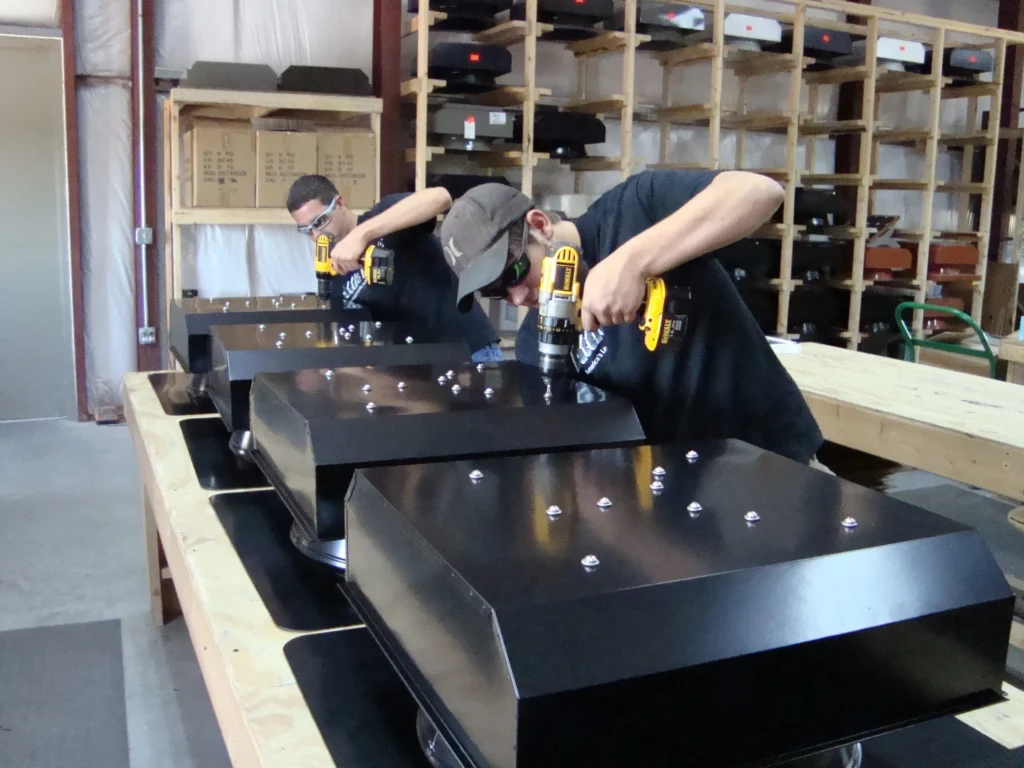
Two Attic Breeze employees assembling solar attic fan housings at the Gatesville, Texas plant
Support Team Attic Breeze Group Training

Bring Attic Breeze into the opportunity.

Swipe to see all rep options

Need help with a quote?

Working through product selection, pricing, or a project bid? Send your rep the details and let them help move it forward.

Need help closing a deal?

Bring your Attic Breeze rep into the conversation for product education, project questions, or help presenting the value of the system.

Need project or jobsite support?

Planning a larger opportunity or want Attic Breeze involved before installation? Tell us about the project and we’ll connect you with your rep.

Train my team

Schedule product education, installer training, or an Attic Breeze Lunch & Learn for your crew.

Product knowledge · Installation techniques · Sales education

Attic Breeze sales rep and a roofing contractor in front of a TM Metals and Roofing truck
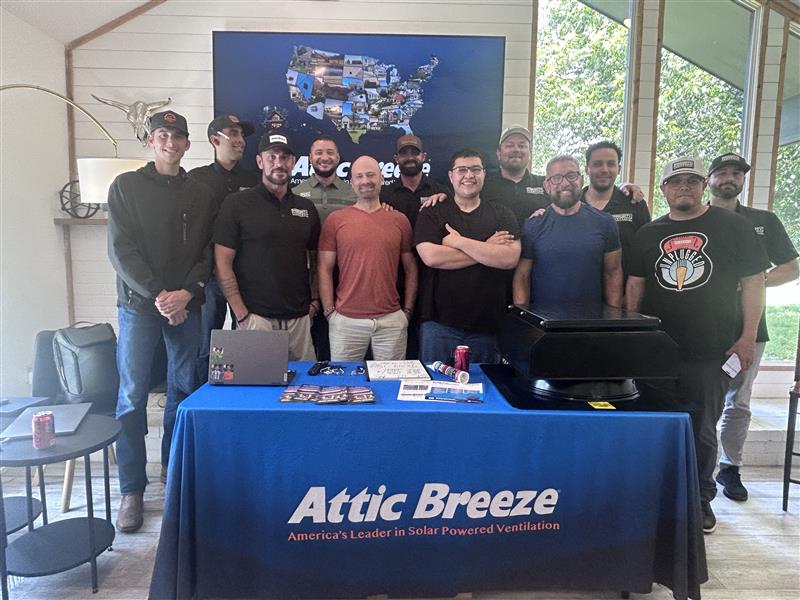
Group of roofing contractors at an Attic Breeze training session with a solar attic fan and literature on a branded table

Straight answers

What the pros want to know.

How much attic ventilation does a home need?

The common code minimum is 1 square foot of net free vent area for every 150 square feet of attic floor. A 1:300 ratio is permitted where a vapor retarder is present, or where 40 to 60 percent of the vent area sits in the upper portion of the attic.

Net free area is the part people get wrong. It is the actual open area air can pass through, not the outside dimensions of the vent — louvers, screening and insect mesh routinely cut a vent's effective opening to half its physical size or less, and the rating is what counts. Run the attic through the Intake Check on this page for the total figure. Local amendments govern, so confirm the ratio against the code in your jurisdiction.

How much intake ventilation does a solar attic fan need?

At least as much net free intake area as the fan is rated to exhaust — roughly half the attic's total requirement, and running the intake side heavy is better than running it lean. A fan can only move the air the soffits let in.

When intake is short, the fan does not simply underperform. It finds replacement air on the easiest path available, which is usually conditioned air pulled up through ceiling penetrations, can lights and top plates — so the homeowner pays to cool air that goes straight into the attic, and the rated airflow still never shows up. Every Attic Breeze technical data sheet lists the intake area that model needs. Check it against the listed rating of the vents actually on the house, because painted-over or blocked soffits deliver a fraction of theirs.

How many solar attic fans does a house need?

Most homes take one fan per 1,200 to 1,800 square feet of attic floor, but the number moves with roof pitch and type, sun exposure, how many separate roof planes the attic has, and the intake available to feed it. It is never set by the size of the vent opening already up there.

Run the attic through the ventilation calculator for a count and a recommended model. Where the choice is close, one higher-output unit usually beats two smaller ones — same airflow, one roof penetration instead of two, and one less thing to flash.

Can you use a solar attic fan with a ridge vent?

Yes, but soffit intake has to carry the load. A powered fan and a continuous ridge vent both sit high on the roof, so if intake is short the fan takes the path of least resistance and pulls air back down through the ridge instead of up from the eaves. The attic gets a loop of its own air and the ridge vent stops working as intake or as exhaust.

Confirm the intake net free area first, mount the fan away from the ridge line, and check the installation guide for the model and mount going on. On a roof where the ridge cannot be reworked, gable-mounted GableBreeze™ is often the cleaner answer. Send the roof detail to support@atticbreeze.com and we will work through it with you.

Can a solar attic fan be installed on a tile or metal roof?

Yes, using a curb-mount unit. Self-flashing models (SFA / SFD) are built for shingle and low-profile roofing at 3/12 to 12/12 pitch. Curb-mount models (CMA / CMD) sit on a roof curb for tile, metal and low-slope work, from flat to 12/12.

Where no roof penetration is acceptable at all, GableBreeze™ mounts behind or beneath a properly sized passive gable vent and leaves the roofline intact. Curb sizing and flashing details are in the installation guide for each configuration.

Do solar attic fans need electricity or hardwiring?

No. Attic Breeze solar attic fans run entirely off their own solar panel — no circuit, no junction box, no electrician and no line on the homeowner's power bill. There is nothing to permit as electrical work and nothing to coordinate with another trade.

The fan also has no controls to set. An automatic thermal switch starts and stops it based on attic temperature. Where a homeowner wants monitoring or added control, BreezeMate™ is an optional accessory rather than a requirement.

Do solar attic fans work on cloudy days or at night?

They run whenever the panel is making power, so airflow tracks available sunlight and the fan does not run after dark. On an overcast day the fan still moves air, just less of it than at midday sun.

In practice that lines up with when an attic needs the help: peak attic heat happens during peak sun, and attic temperature falls on its own overnight. Panel placement matters more than most people expect — UltraBreeze™ and GableBreeze™ offer remote or detached panels so the panel can go where the sun is even when the fan has to go somewhere shaded. Rated airflow figures on each technical data sheet are stated at full sun.

Can solar attic ventilation reduce attic heat and HVAC load?

Yes — by removing accumulated heat before it transfers into the living space. A poorly ventilated attic in summer runs far hotter than outdoor air. That temperature difference is what drives heat through the ceiling plane and into ductwork and equipment sitting in the attic. Lowering the attic temperature lowers the difference the system has to fight.

It is not a substitute for insulation, air sealing or correctly sized equipment, and the size of the effect depends on the specific house. For HVAC contractors the useful sequence is to address attic heat first, then size the equipment — rather than oversizing to compensate for an attic nobody vented.

Are Attic Breeze solar attic fans approved for Florida and the High-Velocity Hurricane Zone?

Yes, for roof-mount models. UltraBreeze™ SFA and CMA carry Miami-Dade NOA 25-0625.11 and Florida Product Approval FL47212. AeroBreeze™ roof-mount models carry Miami-Dade NOA 26-0702.03.

Approvals run by model and by mount type, and each approval document states its own conditions and limitations of use on its face. Pull the record that matches the fan actually going on the roof rather than the series name — every current record is filed under Product Approvals and summarized on the Windstorm Certified page.

Are Attic Breeze solar attic fans accepted for Texas windstorm certification?

Yes. The Texas Department of Insurance accepts the Miami-Dade Notice of Acceptance and lists Attic Breeze roof-mount fans in the state Windstorm System, which is what a windstorm inspector needs to see when a roof in the designated catastrophe area is submitted for a WPI-8 certificate.

Records are searchable on the TDI product evaluations portal and filed under Product Approvals. Bring the model number and mount type — the listing is specific to both.

Do Attic Breeze solar attic fans have a fire safety shutoff?

Yes, on every model, standard in the box. An integrated fire safety switch uses a thermal fuse to stop fan operation when attic temperatures climb above 228°F, so the fan is not moving air during a fire.

It is part of ProSecure™ under the CoreShield™ build standard rather than an accessory to spec, and it applies across UltraBreeze™, AeroBreeze™ and GableBreeze™. If a plans examiner or inspector asks for documentation, it is called out on the technical data sheet for the model.

What warranty comes with an Attic Breeze solar attic fan, and who registers it?

Every Attic Breeze solar attic fan carries a lifetime limited parts warranty, and either the contractor or the homeowner can register it — but the contractor registering at the truck is the better habit.

It takes about two minutes, it starts coverage immediately instead of leaving paperwork in a drawer, and it puts the install on record under your company rather than nobody's. Register at warranty registration; full terms are in Warranty documents.

Does Attic Breeze pay contractors for installing its fans?

Yes — there are three programs, and they stack rather than replace each other. Breeze Boost™ is a $200 rebate on a contractor's first Attic Breeze installation, claimed on its own rebate form. Certified Installer adds training, the badge, a listing on the installer map, lead referrals and co-op advertising. Pro Advantage rewards ongoing volume with Breeze Bucks.

None of the three requires a membership fee, and you do not have to work through them in order. Terms, current rates and the enrollment forms live on the Installer Programs page, or ask your rep and they will walk you through which one fits where you are.

Where can contractors buy Attic Breeze solar attic fans?

Through authorized distributors nationwide, or direct online for single units. Distributor locations are listed on the Where to Buy page. For one-off units and accessories, atticventusa.com ships direct.

For pallet quantities and project pricing, your distributor or your Attic Breeze rep will get you further than a cart will — full pallets ship free. BreezeMate™ controls and curbs, brackets and accessories are ordered the same way.

Does Attic Breeze provide installation and technical support for contractors?

Yes, from our own team in Gatesville, Texas — not an outsourced call center. Call (254) 865-9999 or email support@atticbreeze.com for sizing, product selection, mounting questions or a unit that is not behaving. Have the model number and mount type ready off the unit label — it determines which guide and which approval apply.

Installation guides are published by model and mount type in English and Español, and technical data sheets carry the CFM, wattage, net free area, dimensioned drawings and approval numbers a plans examiner asks for. We also run product education, installer training and Lunch & Learns for crews — ask your rep to schedule one.

Question about a specific attic? Send us the details and we will work it out with you. Call (254) 865-9999, email support@atticbreeze.com, or get to the right team.

Attic Breeze

Talk to an Attic Breeze Sales Rep

Tell us a little about yourself and what you need. We’ll make sure your request gets to the right person.

Attic Breeze support

Tell us what you need

Give us the details and we’ll route it to the right Attic Breeze team — technical support, your rep, or both.